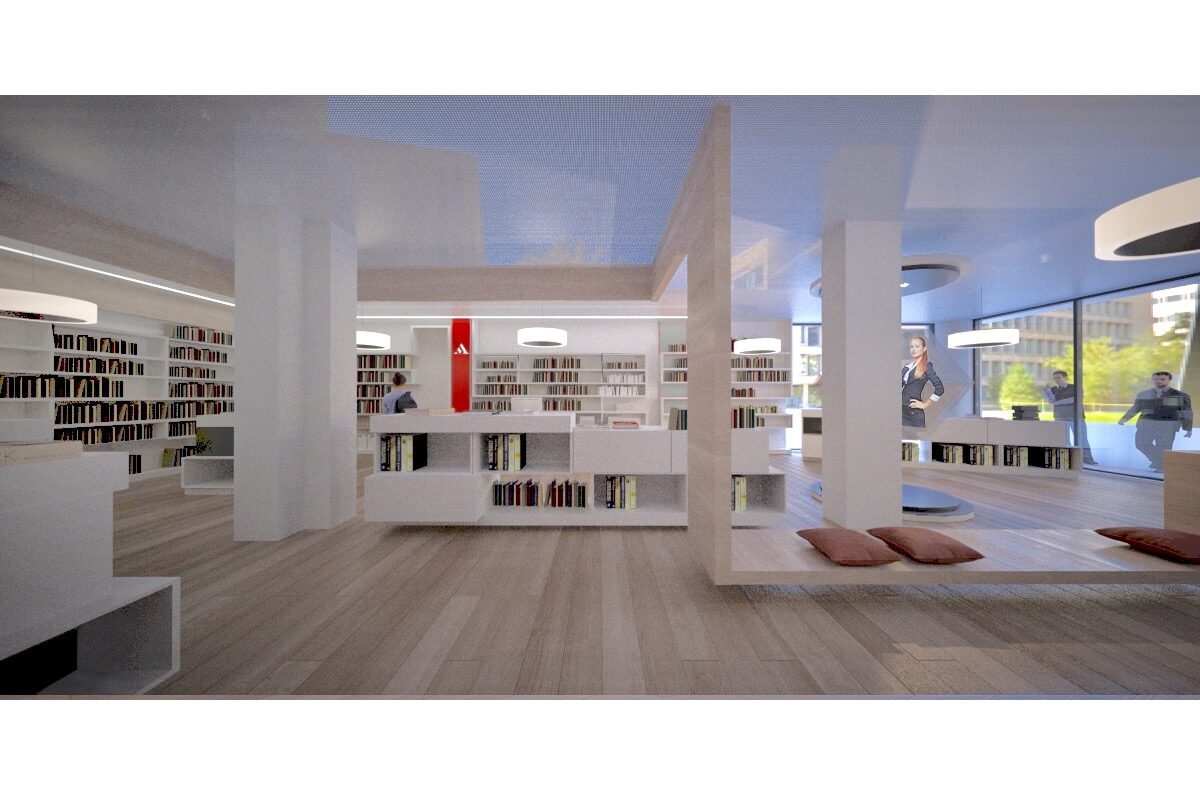
This proposal centers on a striking contrast between simple, essential lines and groundbreaking innovation. The latter is embodied by a double holographic pyramid featuring a real-time interactive hostess who engages with Mondadori Store customers via Esaglam, a software currently unique in the world.
The design incorporates a wooden "meander" starting from the entrance. This element serves as a seating area for customers to browse books before purchase, fostering interaction with the virtual hostess. It also traces an ideal path along the sound-absorbing false ceiling, eventually descending to become part of a bookstore shelf. A complementary line of light within the false ceiling illuminates the store's less-lit walls (away from openings), always intersecting with the wooden meander. This lighting is augmented by circular, black and white pendant lamps, culminating in a new sense of order.
This architectural concept aligns with Vittorio Gregotti's exploration of architectural practice through the dialectical opposition of order and disorder. Gregotti posits that disorder can be a necessary suspension of established values, paving the way for a new order that addresses contemporary historical conditions. However, he also acknowledges that disorder has become an end in itself in the relentless pursuit of novelty within modern architecture, often driven by market and consumerism demands. Against this trend, Gregotti advocates for a practice where design acts as a tool to control disorder, thereby opening architecture to essential possibilities and confronting current challenges.